
Nursing school is a whirlwind of clinical rotations, endless lectures, and late-night study sessions. But perhaps the most daunting task for any nursing student is the dreaded case study. It’s not just about listing symptoms and medications; it’s about proving you can think like a professional nurse. When you are tasked with analyzing a real or hypothetical patient scenario, your goal is to demonstrate clinical judgment, empathy, and a deep understanding of pathophysiology. A well-structured case study can be the difference between a passing grade and a high distinction that sets you apart in your cohort.
Writing these papers requires a delicate balance of academic rigor and practical healthcare knowledge. Many students find themselves overwhelmed by the sheer volume of data, leading them to seek out a nursing assignment help service like myassignmenthelp to understand how to bridge the gap between classroom theory and clinical practice. Whether you are analyzing a patient with chronic COPD or a pediatric case of dehydration, the structure of your paper remains the “skeleton” that supports your entire clinical argument. If the skeleton is weak, the whole paper collapses, no matter how much research you put into it.
Phase 1: The Patient Profile and Initial Assessment
The foundation of every high-distinction nursing case study is the Patient Profile. This is where you introduce the individual behind the chart. Instead of just saying “a 65-year-old male,” give the reader a holistic view. Include their age, gender, occupation, and social history. Why? Because a 65-year-old male who lives alone in a third-floor walk-up has different nursing needs than one who lives with a supportive family in a ground-floor home.
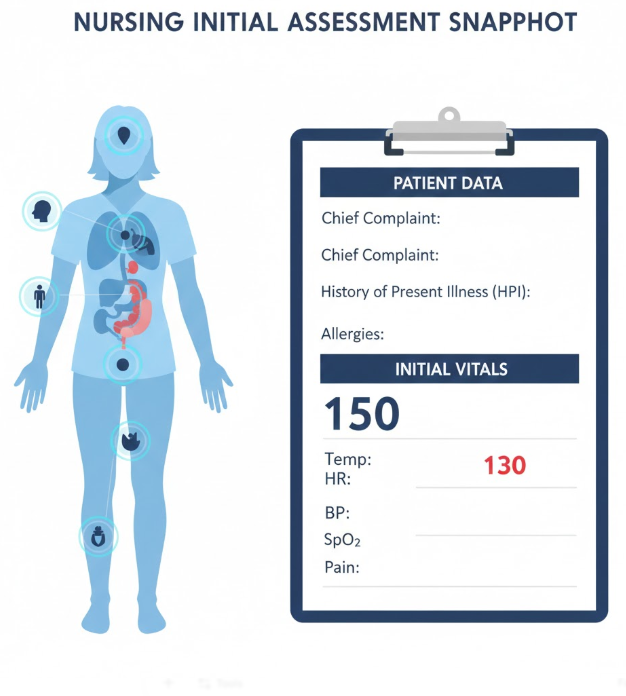
Next, dive into the Chief Complaint. Use the patient’s own words where possible. This is followed by the history of present illness (HPI). Use the PQRST mnemonic (Provocation, Quality, Region, Severity, Timing) to describe pain or symptoms. High-scoring papers don’t just list these; they explain the significance of these findings. For example, if a patient has a high heart rate, don’t just record the number—mention how this relates to their underlying condition, such as potential compensation for low blood pressure.
Phase 2: Pathophysiology—Connecting the “Why” to the “What”
This is the section where most students lose marks. To get a high distinction, you must explain the biology of the disease in relation to your specific patient. If your patient has Type 2 Diabetes, don’t just give a textbook definition of the disease. Instead, explain how this patient’s sedentary lifestyle or diet has led to insulin resistance and how that is currently manifesting in their slow-healing foot ulcer.
You should use current medical literature to support your claims. Discuss the cellular level changes and how they translate into the clinical manifestations you observed in the assessment phase. This shows the marker that you aren’t just memorizing facts—you are applying them to a real-life human being.
Phase 3: The Nursing Care Plan (NCP)
The Nursing Care Plan is the heart of your assignment. This is where you use the ADPIE (Assessment, Diagnosis, Planning, Implementation, and Evaluation) framework. Your nursing diagnoses must be prioritized using Maslow’s Hierarchy of Needs. Always address “Life-Threatening” issues like airway or circulation before moving on to “Comfort” issues like anxiety or mild pain.
For every intervention you suggest, you must provide a rationale. A rationale is simply the “reasoning” based on science. If you suggest elevating the patient’s head to 45 degrees, your rationale would be to “maximize lung expansion and decrease the work of breathing.” This evidence-based approach is what professors look for when awarding top grades.
Learning How to Write a Nursing Case Study effectively means mastering the art of the “SMART” goal—Specific, Measurable, Achievable, Realistic, and Timely.
Phase 4: Implementation and Evidence-Based Interventions
When you move into the implementation phase, focus on what the nurse actually does. This includes administering medications, providing patient education, and performing physical tasks like wound care. However, simply doing the task isn’t enough. In a high-distinction paper, you must discuss Evidence-Based Practice (EBP).
Mention recent clinical guidelines or journals. For instance, if you are discussing fall prevention, cite the most recent hospital protocols or national health standards. This demonstrates that you are an informed practitioner who stays up to date with the latest changes in the medical field. It’s about showing that your actions are backed by data, not just “the way it’s always been done.”
Phase 5: Evaluation and Reflection
The final piece of the puzzle is the evaluation. Did your interventions work? If the patient’s oxygen saturation increased from 90% to 98% after your intervention, the plan was successful. If the patient’s pain remained an 8/10, you must explain why the plan failed and what you would change next time.
This leads into the Reflection section. Reflective practice is a core requirement for professional nursing registration worldwide. Use a model like Gibbs’ Reflective Cycle to talk about what you learned from the case. Be honest—what was challenging? What would you do differently if you encountered this patient again? This level of self-awareness is a hallmark of a high-distinction student.
Expert Tips for Getting Your Content to Rank on Google
To ensure this case study or any nursing-related blog post ranks high on search engines like Google, you need to focus on E-E-A-T (Experience, Expertise, Authoritativeness, and Trustworthiness). Here is how to apply it to your writing:
- Cite High-Authority Sources: Always link to or mention sites like the World Health Organization (WHO), PubMed, or the Mayo Clinic. Google trusts content that associates itself with reputable medical institutions.
- Use Clear Subheadings: Notice how this article uses H2 and H3 tags. This makes it “crawlable” for Google and “scannable” for students who are in a hurry.
- Answer “People Also Ask” Questions: Include a FAQ section at the end of your posts that answers common questions like “What are the 5 parts of a nursing case study?”
- Write for a 12th-Grade Level: Even though the subject is medical, the language should be accessible. Avoid “medicalese” when a simple word will do. Instead of saying “The patient was experiencing epigastric discomfort,” you can say “The patient reported sharp pain in the upper stomach area.”
Conclusion: Putting it All Together
Structuring a high-distinction nursing case study is about more than just filling in a template. It is a narrative of a patient’s journey through the healthcare system, viewed through the lens of a clinical expert. By following the patient profile, pathophysiology, NCP, and reflection structure, you provide a comprehensive look at patient care that markers love.
Remember, the best case studies are those that treat the patient as a person, not a diagnosis. By combining empathy with evidence-based research and a clear, logical structure, you’ll find yourself moving toward those top-tier grades in no time.
Frequently Asked Questions
What are the primary components of a professional nursing case study?
A comprehensive analysis typically includes a detailed patient profile, a thorough physical and psychosocial assessment, a discussion on the pathophysiology of the condition, and a structured care plan using the assessment, diagnosis, planning, implementation, and evaluation (ADPIE) framework.
How can I ensure my interventions are considered evidence-based?
To align with evidence-based practice, you should justify every nursing action with rationales derived from current clinical guidelines, peer-reviewed journals, or established medical protocols. This demonstrates that your care decisions are supported by the latest scientific research.
Why is reflection important in a clinical assignment?
Reflection allows you to evaluate your own clinical reasoning and decision-making processes. By analyzing what worked well and what could be improved, you demonstrate the self-awareness and critical thinking required for professional registration and continuous improvement in patient care.
How should I prioritize patient needs in a care plan?
Effective prioritization involves using frameworks like Maslow’s Hierarchy of Needs or the ABC (Airway, Breathing, and Circulation) approach. This ensures that life-threatening issues are addressed immediately before moving on to less urgent concerns like patient comfort or education.
About the Author
Georgia Taylor is a dedicated academic writer at myassignmenthelp, where she specializes in crafting high-quality educational content for students. With a passion for simplified learning and professional research, she focuses on delivering insightful guides that help learners navigate complex university assignments with ease.